Key takeaways
- The National supervisory authorities long relied on mutual confidence and the passporting mechanism to enable cross-border flows of financial services, leaving to ESMA led supervisory convergence the role to iron out differences among member states. The Market Integration Package proposal proposes to abandon this approach.
- The Market Integration Package extends ESMA direct supervision on CASPs of all sizes operating exclusively in crypto, far beyond the scope initially suggested by major regulators such as the AMF, FMA, and Consob in September 2025. Their call for centralized powers reflected concerns about regulatory race-to-the-bottom in certain European member states.
- MiCA proportionality principle preserved lighter notification regimes for already regulated entities, like credit institutions, investment firms and management companies/AIFMs, opening the space for license-lending and white-labeling arrangements already familiar in Europe. The devised threshold mechanism for ESMA direct supervision to extend to these entities might turn out to stifle the evolution of license lending and white-label solutions for crypto assets in Europe.
ESMA Direct Supervision on CASPs Could Kill License-Lending Models in Europe
Trust was the founding principle of the European single market.
National supervisory authorities trusted one another enough to allow financial services and products to cross borders through the European passport mechanism. Subtle differences among member states were always accepted as an inherent part of this ambitious project, which began by harmonizing selected aspects amid a patchwork of varying business customs and administrative practices. The prevailing belief was that ESMA’s supervisory convergence efforts would gradually smooth out discrepancies as the Union expanded by progressively accepting new member states.
The Market Integration Package, recently published by the European Commission, represents a sharp departure from that model. It proposes replacing trust with a tech-intensive, centralized bureaucratic system, based in Paris, to oversee the entire life cycle of crypto and digital asset service providers across Europe.
The Short-Lived MiCA Compromise
When the MiCA Regulation entered into force in 2023, it was celebrated as a landmark achievement. Despite the novelty of the asset class, European policymakers opted for the same decentralized supervisory model traditionally applied to conventional financial services. Authorization and day-to-day supervision of crypto-asset service providers (CASPs) were assigned to national competent authorities across the single market, while ESMA retained its standard role of promoting supervisory convergence.
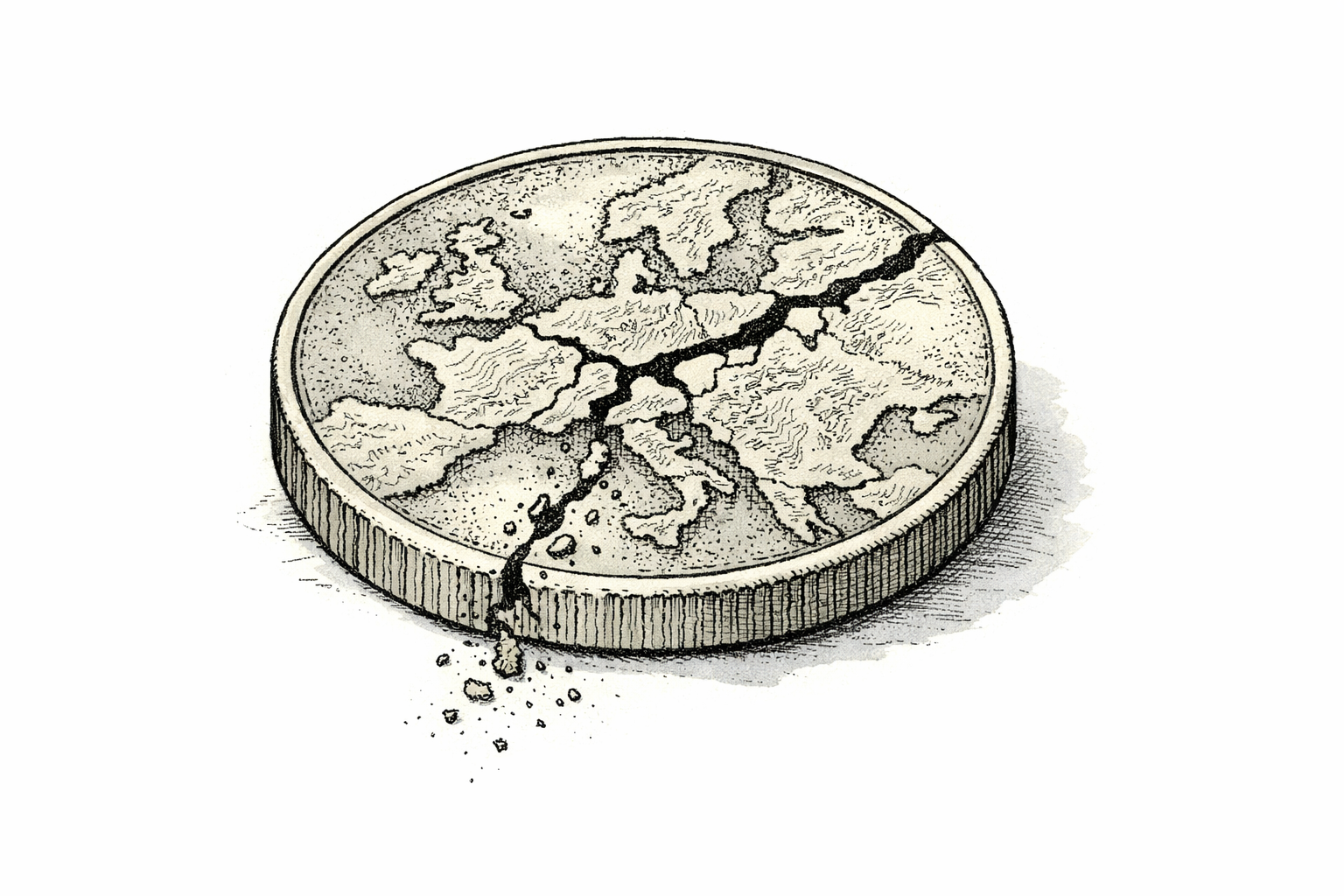
MiCA quickly exposed the structural limits of decentralized oversight and supervisory convergence. Or at least that became a convenient narrative. A borderless digital economy driven by rapid innovation proved far less compatible with fragmented supervision than the more traditional financial sector. At a moment when single-market dynamics increasingly favored the centralization of supervisory power, crypto and digital assets offered particularly fertile ground for the centralization argument. The core of the new regime proposed for crypto and digital assets in the Market Integration Package is therefore the establishment of ESMA direct supervision on CASPs.
The Protectionist Push for Centralization
The shift toward ESMA direct supervision on CASPs did not arise in isolation. While the case for similar centralization in cross-border fund distribution remains highly contentious, recent history indicates that political support for a power transfer in crypto markets had already solidified among Europe’s most influential regulators.
In September 2025, the French AMF, Austrian FMA, and Italian Consob publicly endorsed a proposal calling for direct ESMA powers of authorization over significant CASPs in Europe. Their rationale was rooted less in ideology than in protectionism. They reacted to the emergence of certain member states as crypto gateways—jurisdictions already known for relaxed supervisory standards. In a market defined by extreme concentration, where trading volumes flow through a small number of global platforms accessible via borderless interfaces, the eagerness of some member states to attract crypto business by enabling regulatory arbitrage and a race to the bottom in standards posed a genuine risk.
The Market Integration Package ultimately goes further than these authorities requested, both in scope and intensity. It does not merely redefine where supervisory powers reside; it captures all categories of CASPs in Europe—not only the significant ones as originally suggested by the three national authorities. The transition to ESMA direct supervision on CASPs as envisaged by the European Commission will encompass all service providers operating exclusively in the crypto space, irrespective of size.
Proportionality vs. Centralization and the Threshold Mechanism
The power centralization proposed in the Market Integration Package also introduces loopholes into the architecture of ESMA direct supervision on CASPs. MiCA originally allowed a lighter notification regime for entities already regulated under other frameworks—credit institutions, full-scope MiFID investment firms, management companies, and AIFMs—out of respect for the principle of proportionality. This approach enabled these firms to comply with MiCA without duplicative authorization, theoretically preserving space for innovative license-lending and white-labeling models long established in fund management and more recently adapted to investment services in the post-Brexit environment.
The Market Integration Package counters this flexibility with a strategic threshold mechanism that serves as the trigger for ESMA direct supervision on CASPs. Credit institutions, investment firms, and fund managers may continue offering crypto services under their existing licenses provided those services remain ancillary. The proposal defines “main activity” as generating more than 50% of annual turnover from crypto-asset services over two consecutive years, based on the last available audited financial statements. Once the threshold is crossed, the entity is reclassified, and supervisory responsibility shifts directly from the home-state NCA to ESMA.
To make the model operational, ESMA is required to conclude cooperation agreements with the original competent authorities, ensuring continuity of oversight for non-MiCA activities. Nevertheless, supervision of the crypto-asset portion becomes decisively centralized. When these firms breach the threshold, the new model of ESMA direct supervision on CASPs takes effect.
The Impact on Market Innovation
Whether the amendments proposed in the Market Integration Package, with ESMA direct supervision on CASPs, will preserve or eliminate the potential for license-leasing and white-labeling models in Europe’s crypto and digital asset space remains uncertain. In fund management, the ability to leverage a third party’s regulatory infrastructure has long been a key driver of market entry, competition, and product diversity.
The Market Integration Package may place the growth of analogous models in crypto under serious pressure. By activating ESMA direct supervision on CASPs for any firm exceeding the 50% turnover threshold, the European Commission risks stifling the independent solutions that have historically supported the broader European economy. The shift to ESMA direct supervision on CASPs signals a possible decline in enthusiasm for the license-lending model that underpinned the success of the European investment fund industry. The threshold mechanism further complicates the picture: it will likely make it difficult for firms not exclusively focused on digital assets to sustain a lending business without crossing into ESMA direct supervision on CASPs.
By centralizing authority through ESMA direct supervision on CASPs for all pure-play crypto and digital asset providers, the European Commission effectively places the future of license-lending solutions in crypto in ESMA’s hands.